2024 · Research
How familiarity and meaningfulness shape our ability to intentionally forget
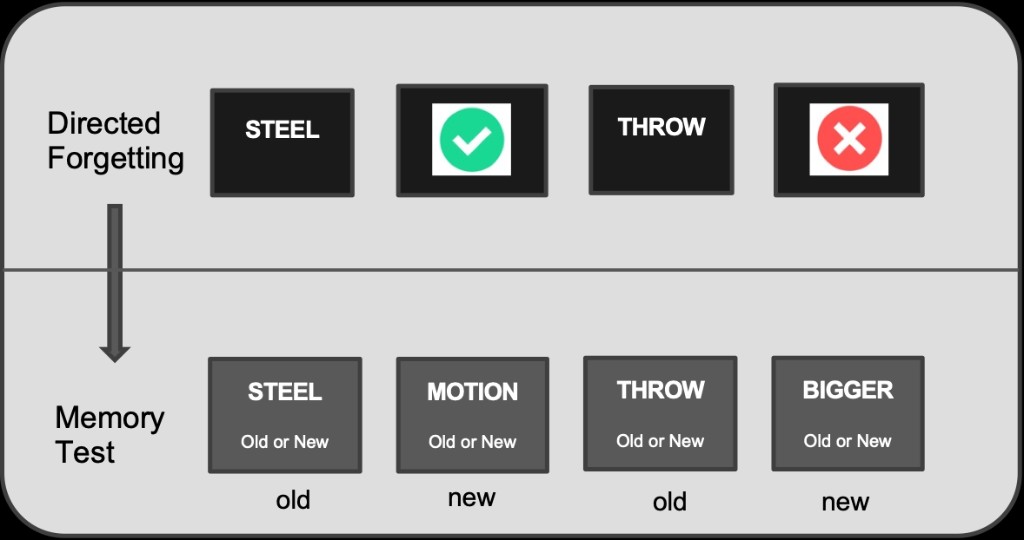
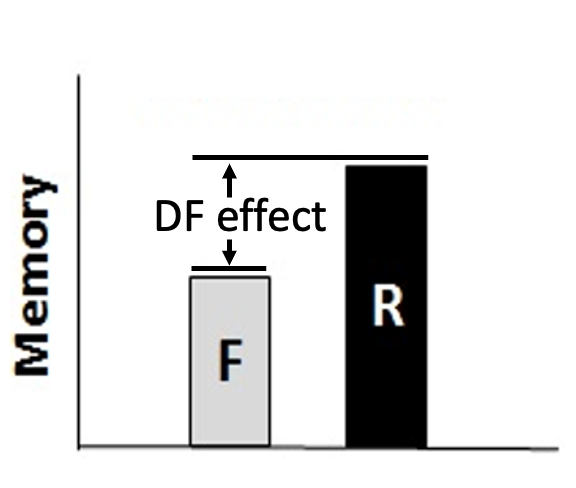
We encounter enormous amounts of information in our daily lives, some of which is routine and familiar, and some that is novel. Not all information is worth maintaining in mind, and it may even be beneficial to forget some unimportant, irrelevant, or painful memories. The ability to intentionally forget unwanted information is a desired cognitive function because it benefits the efficiency of information processing (Bjork, 2011). One of the established laboratory paradigms for examining the control of unwanted memories is the directed forgetting (DF) procedure (Bjork et al., 1968). The current paper focuses on the item-method variant of DF, in which participants are presented with information to study for a subsequent memory test, and the presentation of each item is subsequently followed by a forget (F) or remember (R) cue.
The Power of Familiarity: The More You See It, the Harder It Is to Let Go
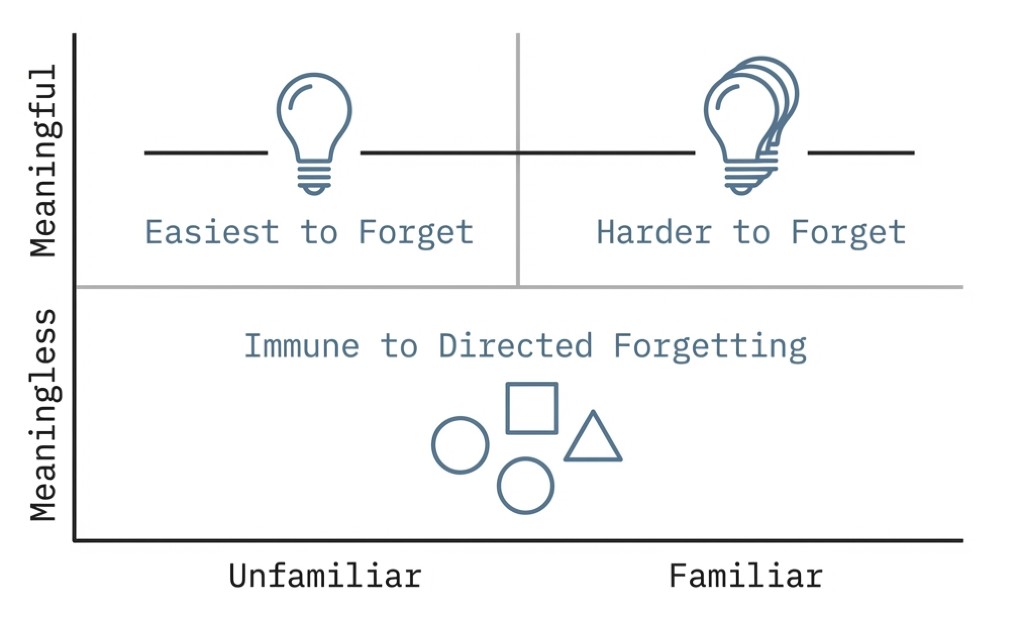
In the first experiment, participants were asked to memorize words, some of which they had seen multiple times before the "forget" instruction was given. The results were clear: prior episodic familiarity makes information harder to intentionally forget. While participants could still forget familiar words to some degree, the "forget" instruction was significantly less effective for words they had seen six times compared to those they saw for the first time. Interestingly, once an item reached a certain level of familiarity, adding even more repetitions didn't make it much harder to forget—it simply became "entrenched".
The "Meaning" Gap: Why Fractals and Nonwords Are Forget-Proof
Perhaps the most striking finding of the study was the role of semantic meaningfulness. We tested whether we can intentionally forget meaningless items: such as fractal images, abstract shapes, or nonwords. We found that meaningless visual stimuli are almost entirely immune to directed forgetting. Even when these items were repeated many times to ensure they were well-remembered, participants could not "forget" them on cue.
The sophisticated "delete" function
To conclude, recognition performance alone does not determine how easily we can forget something. Our brain prioritizes intentional clearing out meaningful information. To purposefully forget, you must first understand.