2025 · Research
Intentional forgetting of visual scenes
Think of a memory you would rather lose. Would it be easier to let go if it happened in a plain hotel ballroom, or in a hotel built on the ocean floor? And would it matter if you had toured that underwater hotel the week before? That is really what this project is about: how what we expect from the world shapes what we are able to forget.
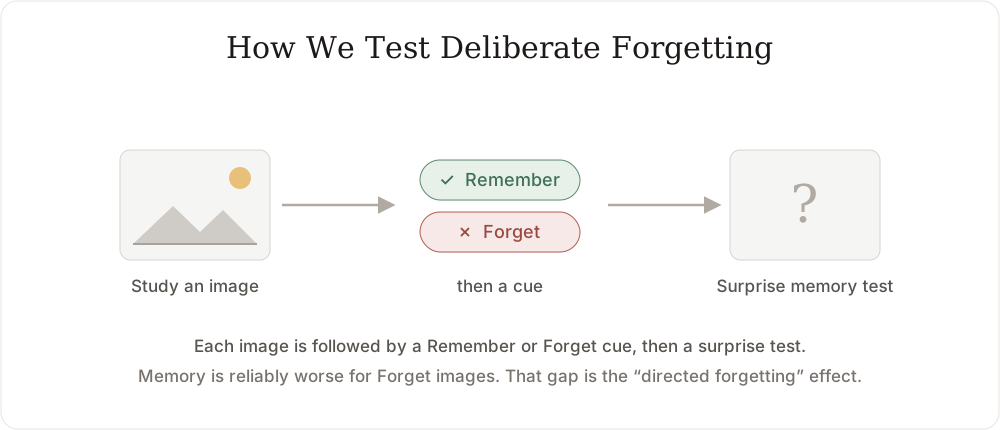
We forget by accident all the time, but we can also forget on purpose, and that is what I study. The tool for it is called directed forgetting: people look at a series of images, and each one is followed by a cue to remember it or to forget it. A surprise test at the end shows what stuck. Memory comes out reliably worse for the forget images, and that gap is the directed forgetting effect.
Surprise at Three Levels
Not all surprises are the same, though. A mug shot from an odd angle is still clearly a mug. An odd-looking beach is still a beach. But a traveler in a full bunny suit at an airport is something else: every piece is familiar, yet together they do not add up to an event that makes sense. We built three experiments around that idea, breaking expectations at three levels: the angle you see an object from, how typical a scene looks, and whether a whole event hangs together.
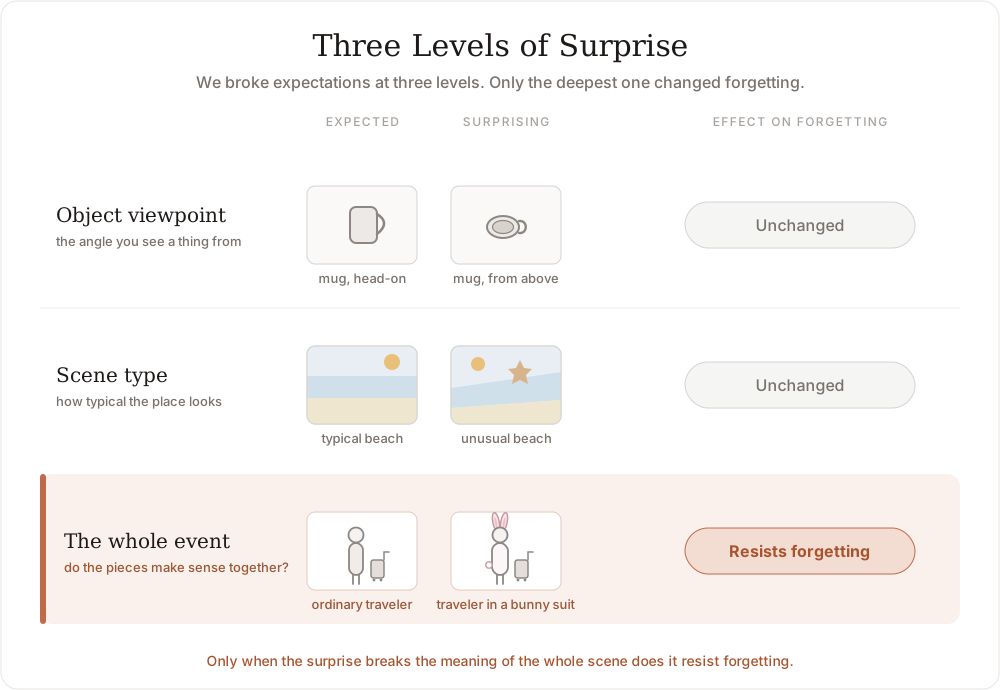
At the first two levels, the forget cue worked just as well for the surprising images as the ordinary ones. The event level was different. There, the improbable scenes held on, even when people were told to forget them. And it is not just that strange things stick in the mind. Memory was actually sharpest for the ordinary angle at the first level, and for the unusual scene at the second. So neither memory strength nor novelty explains why only the deepest surprises resisted.
A Preview Reverses the Effect
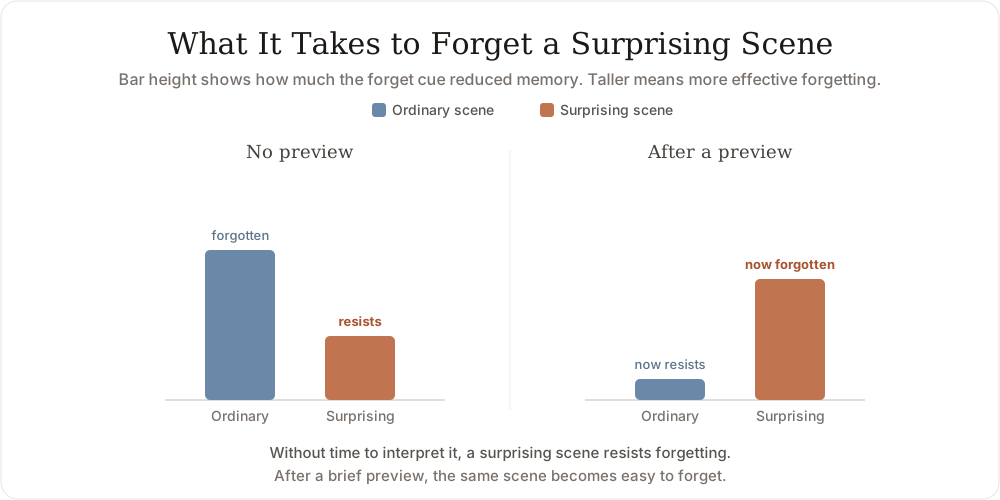
If the trouble is really that a surprising scene takes a beat to make sense of, then giving people that beat ahead of time should help. So we tried it. Before the forgetting task, people saw each image once and just noted whether a person was in it. That small preview flipped the result: the improbable scenes that used to stick now followed the forget cue, and the ordinary ones, seen one extra time, became the hard ones.
Understanding Precedes Forgetting
So what is the preview doing? A separate group rated each scene on how well its parts fit together. After a preview, people found the improbable scenes more coherent, and the more coherent a scene felt, the easier it was to forget on cue. How bizarre it seemed did not matter. To me, that points to something simple. A surprising event holds on while your mind is still working to make sense of it. Once it clicks into a story you can hold, you can finally let it go, the underwater hotel included. This comes from five experiments with more than eight hundred people, and the work is under review.